A Responsible Buyer’s Checklist Before Choosing a Firearm: Common Mistakes and Better Alternatives

A Responsible Buyer's Checklist Before Choosing a Firearm: Common Mistakes and Better Alternatives

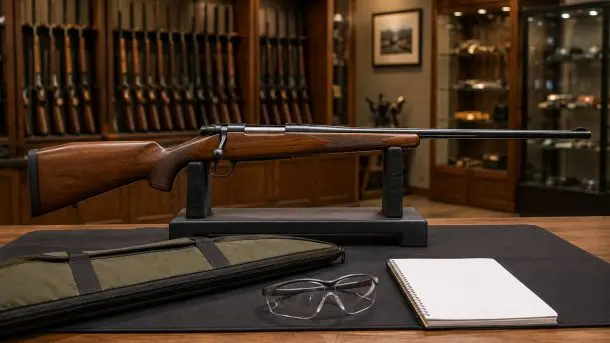
At the range, a new owner discovers that the firearm chosen from a display case is uncomfortable to hold, difficult to operate smoothly and too large for the storage box at home. That is not a failure of enthusiasm; it reflects a buying process focused on appearance and price. A responsible firearm buyer checklist should begin with purpose, fit, training, secure storage, maintenance and current legal requirements, then compare realistic alternatives before money changes hands.

Start with the job, not the product

The right choice depends on what you reasonably expect to do with it. Recreational target practice, informal range use, collecting and lawful home protection can involve different priorities. Write down the main use, how often you expect to practice and who else may have access to the home.

Avoid buying around the vague promise that a firearm will be "good for everything." A compact option may be easier to store and carry where lawful, but offer less grip area and sharper recoil. A larger, heavier option may be more comfortable during extended range sessions while requiring more deliberate storage planning. A long gun can provide a stable platform for some sporting activities, but its size may complicate transport and secure placement.

These are trade-offs, not rankings. Choosing becomes clearer when the intended use is specific enough to test.

Test fit, controls and handling comfort

With the firearm unloaded and handled under qualified range or retail staff's direction, check whether you can reach the controls without shifting your grip, see the sights or aiming system clearly and maintain a safe, controlled hold. If the design feels awkward before practice begins, optimism is unlikely to make it comfortable.

Compare more than one suitable option. Consider grip circumference, balance, weight, operating controls and how easily you can confirm the firearm's condition. A first-time buyer may follow a familiar brand or a friend's recommendation while overlooking a poor fit-one of the most common first-time gun buyer mistakes.

Do not confuse a difficult manual of arms with a useful challenge. A model requiring unfamiliar steps, excessive force or complicated controls may be a poor starting point unless qualified instruction addresses those issues and you can operate it safely every time. A simpler, well-fitting option often supports more consistent practice.

Budget for ownership, not just the purchase

The price tag is only part of the decision. Budget for a suitable locking device or safe, eye and ear protection, cleaning supplies, secure transport equipment, training and range fees. Consumables and replacement parts may also affect long-term cost; verify their availability and compatibility rather than assuming them.

A low initial price can become a false economy if you cannot afford regular training or secure storage. Spending more does not automatically produce a safer or better match. Compare the complete ownership plan and leave room for professional instruction and routine care.

Do not choose accessories before basic fit is settled. Extra equipment cannot correct an uncomfortable grip, unclear controls or unsuitable storage. Buy only what supports safe handling, transport, practice or maintenance, and follow the firearm and accessory manufacturers' instructions.

Make storage and lawful ownership part of the purchase

Have a secure storage plan before the firearm enters the home. This may mean a locked safe, lockbox or other appropriate locking method selected for the household, firearm and likely risks. Consider children, visitors, roommates, theft, fire, moisture and who is authorized to access it. Storage should prevent unauthorized handling while keeping lawful access practical for you.

Plan transport as well. Keep the firearm unloaded when appropriate for the circumstances, secured against unauthorized access and handled according to current official requirements. Laws and regulations vary by location and can change. Check government, law-enforcement or regulatory sources before purchase, transport, storage or transfer; do not rely on an old forum post or a friend's summary.

Lawful ownership involves more than completing a transaction. Understand the requirements that apply to you, follow safe handling rules, know when access must be restricted and keep records or documents where local guidance requires them. If a requirement is unclear, pause the purchase and seek current official guidance or qualified legal advice.

Build a training and maintenance routine

Begin with a qualified instructor who emphasizes basic safety rules, safe loading and unloading, safe direction, trigger discipline and range commands. Start slowly. The goal is repeatable, controlled handling-not proving how quickly you can operate the firearm or how much discomfort you can tolerate.

Before each range session, inspect the firearm according to its manual. Confirm that it is unloaded before cleaning, storage or maintenance, and keep ammunition separate from the cleaning area. Look for obvious damage, unusual looseness, obstruction or a condition you do not understand. Stop and consult the manufacturer or a qualified gunsmith when something seems wrong; do not improvise a repair or modification.

After use, follow the manual's cleaning and lubrication guidance. Too much lubricant can attract debris, while the wrong product or disassembly beyond your training can create new problems. Keep maintenance records if useful, and never ignore a stoppage, cracked component or unexplained change in operation.

Use this decision check before committing

Before purchase, ask:

– Can I state the primary lawful purpose in one sentence?
– Have I compared fit, controls, balance and handling with more than one suitable option?
– Can I afford secure storage, training, protection, maintenance and routine range costs?
– Is the firearm compatible with a storage and transport plan at home?
– Have I checked current official requirements for purchase, possession, transfer and transport where I live?
– Do I know where qualified instruction and manufacturer-approved support are available?
– Am I choosing a manageable platform rather than one based mainly on appearance, pressure or impulse?

If several answers are no, waiting is responsible. The strongest purchase is not necessarily the most powerful, newest or most heavily accessorized. It is the one that fits the owner's lawful purpose, abilities, budget and safety plan-and can be maintained and stored responsibly for the long term.

Choosing the Perfect Shotgun for Self-Defense: A Beginner’s Guide

When it comes to home defense, a shotgun remains one of the most reliable firearms available. Its stopping power, ease of use, and intimidation factor make it a preferred choice for many homeowners. However, selecting the right shotgun for self-defense can be overwhelming, especially for beginners. This guide will help you navigate the essential factors to consider, from gauge selection to ergonomics, ensuring you make an informed decision.

Why Choose a Shotgun for Home Defense?

Before diving into specific models and features, it’s important to understand why a shotgun is often recommended for self-defense:

  • Stopping Power: A shotgun fires multiple projectiles at once, increasing the likelihood of stopping an intruder quickly.
  • Ease of Use: Unlike handguns, shotguns provide a more stable firing platform, reducing recoil shock when used correctly.
  • Intimidation Factor: The mere sound of racking a shotgun can serve as a strong deterrent to potential threats.
  • Reduced Overpenetration: Compared to rifles, shotgun shells (like buckshot) reduce the risk of bullets passing through walls and harming unintended targets.

Key Factors to Consider When Choosing a Self-Defense Shotgun

1. Gauge Selection: 12-Gauge vs. 20-Gauge

One of the most critical decisions is the gauge (bore diameter). The two most common options are:

  • 12-Gauge: The most popular choice for self-defense. Offers high stopping power but has more recoil, which may be difficult for beginners.
  • 20-Gauge: A great alternative for those who want less recoil while maintaining enough stopping power.

If you are new to firearms, a 20-gauge shotgun may be more manageable without sacrificing effectiveness.

2. Pump-Action vs. Semi-Automatic

  • Pump-Action: Requires manually cycling the action between shots. This type is highly reliable and often more affordable.
  • Semi-Automatic: Fires a new shell with each trigger pull, reducing the need for manual operation. Easier to shoot quickly but requires more maintenance and can be pricier.

For beginners, a pump-action shotgun like the Mossberg 500 or Remington 870 is a solid choice due to its simplicity and durability.

3. Barrel Length: Shorter is Better for Home Defense

Shotguns come in various barrel lengths, but for home defense, shorter is better:

  • 18-20 inches: Ideal for maneuverability inside tight spaces like hallways and rooms.
  • 26+ inches: More suited for hunting or sport shooting, not practical for home defense.

4. Stock Type: Traditional vs. Pistol Grip

  • Traditional Stock: Offers better control and absorbs recoil efficiently.
  • Pistol Grip: More compact and maneuverable but harder to control for new shooters.

A traditional stock is generally the best option for beginners due to its stability and ease of use.

5. Ammunition Choice: Buckshot vs. Birdshot vs. Slugs

  • Buckshot (#00 or #1): The preferred choice for self-defense. Delivers multiple projectiles per shot, maximizing stopping power.
  • Birdshot: Lighter pellets, less lethal at a distance but still effective at close range.
  • Slugs: A single large projectile, offering long-range accuracy but with a higher risk of overpenetration.

For home defense, 00 buckshot is the most widely recommended option.

6. Capacity and Reloading

Most defensive shotguns hold between 4 to 8 rounds. Some models allow for magazine extensions, increasing capacity. A higher-capacity shotgun minimizes the need for frequent reloading in a high-stress situation.

Best Shotguns for Home Defense

Here are some of the top-rated self-defense shotguns for beginners:

1. Mossberg 500/590

  • 12-gauge or 20-gauge options
  • Pump-action, highly reliable
  • Ambidextrous safety, easy to operate

2. Remington 870

  • A classic pump-action shotgun
  • Durable and widely available
  • Smooth cycling and ergonomic design

3. Beretta 1301 Tactical

  • Semi-automatic for faster shooting
  • Lightweight yet powerful
  • Ideal for those willing to invest in premium performance

4. Benelli M4

  • Used by military and law enforcement
  • Semi-automatic, gas-operated
  • Higher cost but exceptional reliability

5. Kel-Tec KSG

  • Bullpup design for compact handling
  • Dual tube magazines, holds more rounds
  • Unique design suited for tactical use

Essential Accessories for a Home Defense Shotgun

Once you’ve chosen your shotgun, consider these must-have accessories:

  • Weapon Light: A flashlight attachment allows for target identification in low-light conditions.
  • Side Saddle or Shell Carrier: Enables quick reloading by keeping extra shells within reach.
  • Sling: Helps with weapon retention and carrying.
  • Upgraded Sights: Ghost ring sights or red dot optics improve target acquisition.

Safe Storage and Legal Considerations

Owning a firearm for self-defense comes with responsibilities:

  • Secure Storage: Store your shotgun in a gun safe or with a trigger lock to prevent unauthorized access.
  • Training and Practice: Regular practice at a shooting range ensures familiarity with your weapon.
  • Legal Compliance: Check your local laws regarding firearm ownership, storage, and self-defense regulations.

Final Thoughts

Choosing the right shotgun for home defense involves balancing power, ease of use, and personal comfort. For beginners, a pump-action 12-gauge or 20-gauge shotgun with an 18-20 inch barrel and a traditional stock is a practical and reliable choice. Pair it with proper ammunition, essential accessories, and regular training to ensure you’re well-prepared for any situation.

By following this guide, you can confidently select a shotgun that suits your needs, providing both safety and peace of mind.